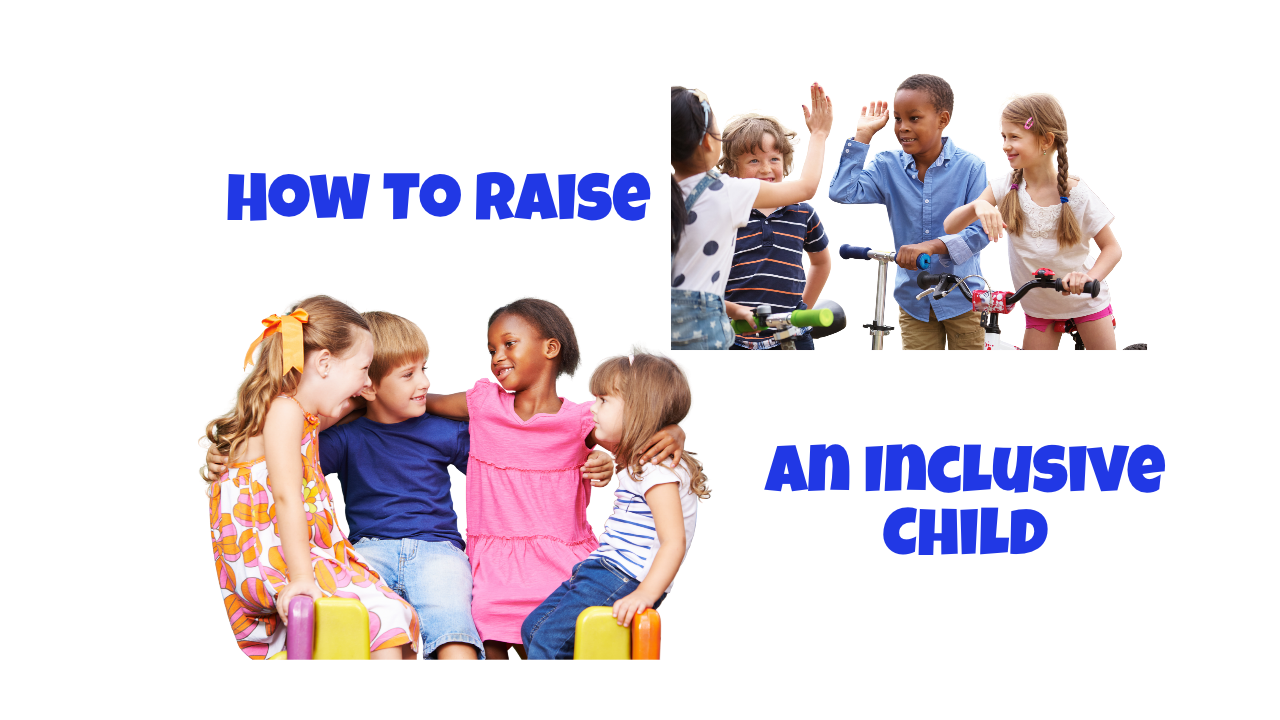
How to Raise An Inclusive Child
- Post author:mycrumbyworld
- Post published:
- Post category:Parent Pantry
- Post comments:0 Comments
Teach your kids to notice who is outside the circle…and make room.
Every parent wants their child to have friends. We hope they find their people and that they are invited to birthday parties, included at the lunch table, chosen for teams, and welcomed into groups.
However, there is another important question we should consider: Are we raising children who make sure others are included, too?
It’s easy to worry about whether our own child belongs, but it takes a different kind of parenting to teach our children to look beyond themselves and notice those who are left out.
At My Crumby World, Rachel Rye advocates for a simple philosophy: Choose inclusion over exclusion. In a childhood culture where belonging can sometimes feel like social currency, this lesson matters more than ever.
Inclusion Is More Than Just Being Nice
We often tell children to “be nice,” “be kind,” and “don’t hurt anyone’s feelings.” While these are important messages, inclusion asks children to go one step further.
– Kindness might mean smiling at a new student.
– Inclusion means asking her to sit beside you.
– Kindness might mean not teasing the child standing alone at recess.
– Inclusion means inviting him into the game.
– Kindness might mean saying hello to someone who is different from you.
– Inclusion means making room for that person in your circle.
Inclusion requires action, and that’s exactly what Rachel Rye wants kids to understand.
Rachel Rye’s Circle Always Has Room
Imagine Rachel standing on the playground with several friends. They’re laughing, talking, and deciding what game to play when Rachel notices another child standing a few feet away. The child isn’t crying, and no one is bullying her; nothing obviously bad is happening. She’s simply standing outside the circle.
Rachel has a choice. She can continue talking with her friends, thinking that she didn’t exclude the girl. Or she can notice. Rachel scoots over, opens the circle, and says, “Want to play with us?”
Those four simple words could change the entire school day for that child. That’s the difference between teaching children not to exclude and teaching them to actively include others.
Rachel Rye’s “Make Room” Challenge
Rachel has a challenge for families this week.
It’s called the Make Room Challenge.
Encourage your child to do one thing that widens the circle.
They might:
-
Invite someone new to play.
-
Sit beside someone they don’t usually sit with.
-
Ask a new student a question.
-
Choose a different partner.
-
Introduce two friends who don’t know each other.
-
Make sure everyone gets a turn.
-
Speak up when someone is intentionally excluded.
-
Invite someone standing alone into the conversation.
Then, at dinner, ask:
“How did you make room for someone today?”
Imagine if that became as common as asking:
“How was school?”