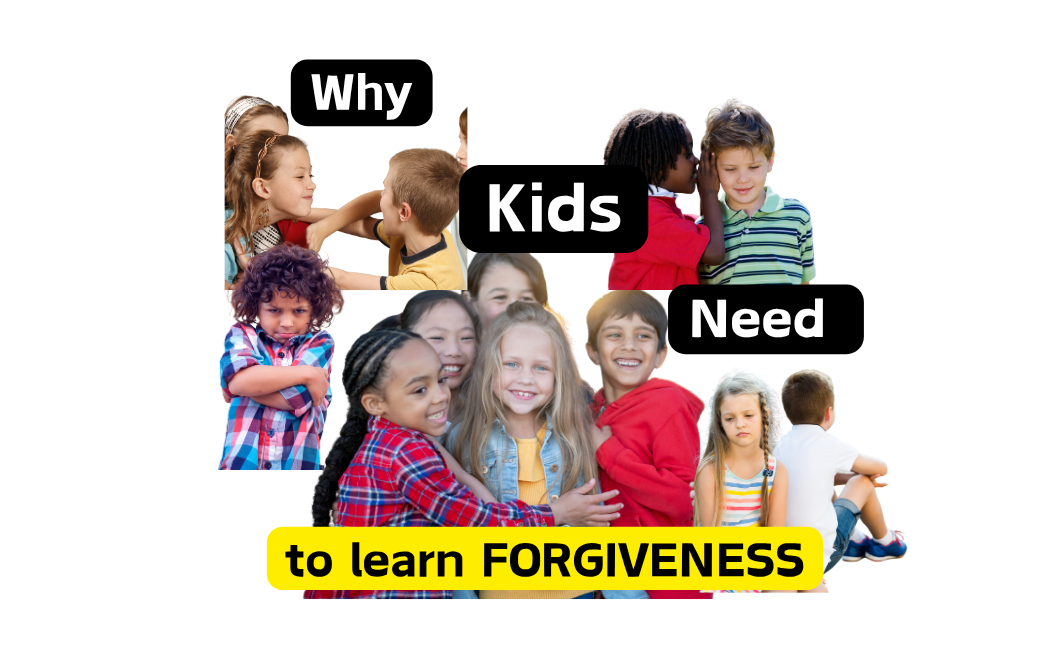
Teaching Kids to Forgive Builds Stronger Friendships (and Stronger Hearts)
- Post author:mycrumbyworld
- Post published:
- Post category:Parent Pantry
- Post comments:0 Comments
Why Teaching Kids Forgiveness Is One of the Greatest Gifts We Can Give Them
Children are going to experience hurt feelings.
Someone won’t share the toy.
A classmate may leave them out at recess.
A friend might say something unkind.
A sibling may accidentally break something they love.
While we can’t protect children from every disappointment, we can teach them one of the most powerful tools they’ll ever use throughout their lives:
Forgiveness.
Learning to forgive isn’t just about “being nice.” It’s about developing the emotional intelligence and social skills children need to build healthy, lasting friendships.
At My Crumby World, one of our sweetest Breadcrumbz, Whitney Wheat, reminds children that compassion and forgiveness help our hearts become stronger…not harder.
Why Forgiveness Matters for Kids
Many children naturally believe that when someone hurts their feelings, they should simply stop being friends forever.
But real friendships don’t work that way.
Every friendship, even the very best ones, will have disagreements, misunderstandings, and mistakes.
Children who learn healthy forgiveness discover how to:
- solve conflicts instead of avoiding them
- communicate their feelings respectfully
- rebuild trust over time
- show empathy toward others
- create deeper friendships
These are the same skills they’ll carry into middle school, high school, college, the workplace, and eventually their own families.
What they learn is that forgiveness isn’t just a childhood lesson, it’s a lifelong superpower.
What Whitney Wheat Teaches About Forgiveness
In one of our YouTube Shorts, Whitney Wheat shares this simple but powerful message with young girls:
“Sometimes friends make mistakes—and guess what? So do we! Forgiving someone doesn’t mean you have to forget, but it does help your heart feel lighter.”
What a beautiful truth. (See the video here: https://www.youtube.com/shorts/kP7pr7HMCgc)
Children often hold onto their hurt feelings for much longer than adults may realize. They tend to replay the situation repeatedly, which can amplify feelings of sadness, anger, or embarrassment.
Whitney helps children understand that forgiveness does not mean pretending that nothing happened. Instead, forgiveness offers a way for us to stop carrying that hurt with us wherever we go.
As Whitney explains:
“Holding onto hurt is like carrying a heavy backpack—you don’t need to carry it forever.”
That image makes perfect sense to children. Imagine trying to run, laugh, play, and make new friends while carrying a backpack full of heavy rocks. Eventually, it becomes exhausting.
Our hearts can feel that way, too.
Forgiveness Doesn’t Mean You Ignore Bad Behavior
One of the biggest misconceptions parents have is that teaching forgiveness means teaching children to accept poor treatment.
It doesn’t.
Children should always know the difference between:
- forgiving someone
- trusting someone again
- setting healthy boundaries
Sometimes, a friend sincerely apologizes and works hard to make amends. Other times, a child may need space, support from a trusted adult, or even a different friendship. Forgiveness does not erase the lessons we’ve learned; rather, it prevents bitterness from taking control of our hearts.
How Parents Can Teach Forgiveness at Home
Teaching forgiveness doesn’t require long lectures.
Instead, look for everyday opportunities.
Talk through conflicts.
Rather than asking:
“Who was right?”
Try asking:
“How do you think your friend felt?”
or
“What could help both of you move forward?”
Model forgiveness.
Children learn far more from watching us than listening to us.
When parents apologize sincerely, forgive one another, and repair relationships after disagreements, children begin to see forgiveness as a normal part of healthy relationships.
Celebrate second chances.
Remind your child that everyone makes mistakes—->including adults.
Mistakes are opportunities to learn, grow, and become kinder people.
Read stories about compassion.
Stories help children safely understand emotions.
At My Crumby World, each Breadcrumbz character introduces children to an important life skill through engaging stories and relatable situations.
Whitney Wheat helps children discover that compassion and forgiveness don’t make you weak.
They make your heart stronger.♥
The Friendship Skill That Lasts a Lifetime
Social skills are not developed solely through teaching children how to introduce themselves or share toys. They are developed through helping children navigate disappointment, conflict, misunderstandings, and the process of making amends.
This is why forgiveness is one of the most valuable skills a child can learn for building friendships. Children who understand how to forgive are often better equipped to resolve conflicts, maintain friendships, and recover from life’s inevitable challenges. As Whitney Wheat reminds us, every child should learn this important lesson:
“Forgiveness is a superpower that lets you grow, glow, and go forward with kindness.”
What a wonderful lesson for children and adults alike.
So the next time your child comes home with hurt feelings, remember that you’re not just helping solve today’s playground problem.
You’re helping shape the kind of friend and person they’ll become for the rest of their life.
💛 Because every child deserves a heart that’s free to love, grow, and forgive.
Watch Whitney Wheat’s Forgiveness Message
Visit the My Crumby World YouTube channel to watch Whitney Wheat’s short message about forgiveness and discover more videos that help children build confidence, compassion, courage, cooperation, and the social-emotional skills they need to thrive both in school and in life.