
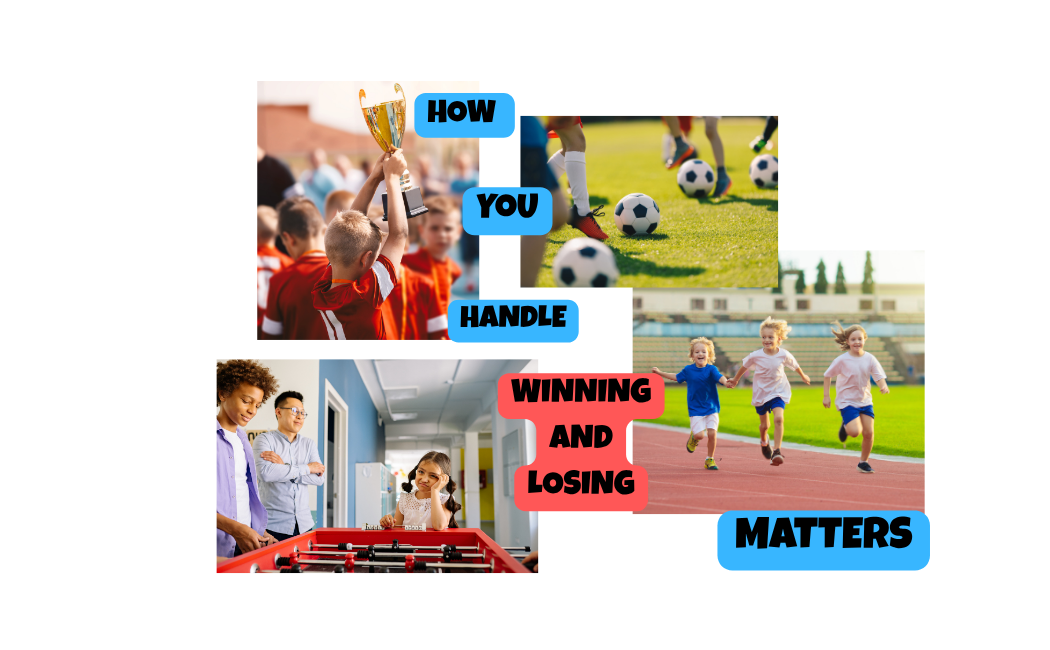
Model Healthy Responses: Your Child Is Watching How You Handle Winning, Losing, and Disappointment, Part 1
- Post author:mycrumbyworld
- Post published:
- Post category:Parent Pantry
- Post comments:0 Comments
We often spend time teaching children how to behave, reminding them to be gracious in victory, to congratulate others, and to remain calm in defeat. However, children learn more from our actions than our words. They observe our reactions to referees, discussions about awards, and our expressions during losses.
When parents model healthy responses, children learn that disappointment is manageable, that others’ success isn’t a threat, and that losing does not affect their worth. As Rachel Rye emphasizes, children may hear our teachings, but they are more likely to repeat what we demonstrate.
Children may hear what we teach, but they are especially likely to repeat what we demonstrate.
Our Reactions Become Their Lessons
Imagine your child has just finished a soccer game. The team lost, and your child missed an important shot. She gets into the car feeling disappointed and embarrassed.
A parent might instinctively say things like:
“That referee made terrible calls.”
“Your teammates weren’t helping you.”
“You should have won that game.”
These comments, while intended to protect the child from disappointment, can inadvertently teach her to blame others whenever she faces a setback.
Now, consider a different response:
“I know that was disappointing.”
“I loved watching you keep trying.”
“What do you think you learned from today’s game?”
This approach acknowledges the loss and validates the child’s feelings without pretending it doesn’t matter. It demonstrates that she can recognize disappointment without being overwhelmed by it. That is emotional resilience in action.
Rachel Rye Learns From an Imperfect Recipe
Rachel Rye enjoys collaborating with others, but even the best teammates face tough days.
In a classroom baking challenge, Rachel and her friends are confident their rye bread will win after practicing and measuring carefully. However, another team takes first place, and Rachel feels disappointed.
Looking at the adults in the room, she wonders if they are criticizing the judges or making excuses. One adult smiles and says, “You worked hard, Rachel. It’s okay to feel disappointed. Let’s congratulate the winning team, and then we can talk about what to try differently next time.”
Rachel learns she can acknowledge her feelings without undermining others’ success. Honoring her emotions while being respectful is an important lesson for her. Healthy responses don’t mean pretending everything is fine.
Healthy Responses Do Not Mean Pretending Everything Is Fine
Modeling a healthy response does not mean that parents should ignore their frustration, hide their sadness, or act cheerful all the time. Children need to see that adults experience difficult emotions, too. The key lesson lies in how we handle those emotions.
A parent might say:
“I am disappointed that this did not work out.”
“I need a minute to calm down before I respond.”
“I made a mistake, and I need to apologize.”
“I am feeling frustrated, but I do not want to speak unkindly.”
These statements demonstrate to children that emotions are not dangerous. Feelings can be acknowledged, managed, and expressed without causing harm to others.
A healthy response does not mean being free of emotion; rather, it is the ability to choose our behavior, even when our emotions are strong.
This is especially important in teaching children how to handle competition healthily.
How Parents Can Model Healthy Competition
Healthy competition is not about eliminating the desire to win; rather, it is about maintaining a proper perspective on winning. Children can strive for success while still respecting their competitors. They can feel disappointed when they lose but still congratulate the winner. They can work towards self-improvement without believing that someone else’s achievement diminishes their own worth. Parents play a key role in establishing this balance by modeling important behaviors.
Congratulate Other People Sincerely
When another child earns an award, makes the team, or receives recognition, it’s important to model a generous response for your child. You could say:
“She must have worked very hard.”
“That is wonderful news for their family.”
“I know you wanted that opportunity too. It’s okay to feel disappointed for yourself while also being happy for her.”
Children need to understand that it’s possible to have two feelings at the same time. Someone else’s success does not diminish their disappointment, and their disappointment doesn’t mean they have to resent someone else’s success.
Speak Respectfully About Coaches, Teachers, and Officials
Adults sometimes make decisions that we may not agree with. This could be an unfair call, a confusing grade, or a decision that disappoints your child. Parents can advocate for their children when necessary without teaching them to feel contempt.
Instead of saying:
“Your teacher clearly has favorites,”
You could say:
“I don’t fully understand the decision. Let’s ask respectfully so we can learn more.”
Instead of saying:
“That coach has no idea what he is doing,”
You could say:
“You may not agree with the decision, but we still need to respond respectfully.”
This approach teaches children how to express their questions or concerns without attacking others. It also emphasizes the importance of taking responsibility for your own mistakes.
Take Responsibility for Your Own Mistakes
One of the most impactful statements a parent can make is: “I was wrong.”
Apologizing does not undermine your authority; rather, it demonstrates to your child what accountability looks like. Consider saying:
– “I became too upset and raised my voice. I’m sorry.”
– “I blamed someone before I understood the full situation.”
– “I did not handle that disappointment very well. I will try again.”
Children who observe adults correcting their mistakes learn that being wrong is not something to be feared. They are less likely to hide their errors, shift blame onto others, or feel the need to appear perfect.
Avoid Comparing Children
Comparison can quickly turn healthy competition into feelings of insecurity. Comments that may seem motivational, such as, “Why can’t you practice as hard as your sister?” or “Look at how well your friend is doing,” can actually be detrimental. Phrases like “Everyone else seems to understand this” encourage children to measure their self-worth against someone else’s progress.
A healthier approach focuses on the individual child’s development: “You have improved since last week,” “What part would you like to keep practicing?” or “Let’s focus on your next step.” Rachel Rye reminds us that every child brings a unique quality to the mix, and their progress does not need to look identical for it to be valuable.


