Discover why teamwork skills for kids are essential for school success and how parents can help children build cooperation, communication, and friendship skills at home.
The Skill Kids Need That You Won’t Find on a Report Card
We invest a significant amount of time preparing children for school. We ask questions like:
– Can they read at grade level? – Do they know their math facts? – Can they remember their homework? – Are they ready for the test?
However, another crucial skill children use almost every day at school likely won’t appear on their report card: teamwork.
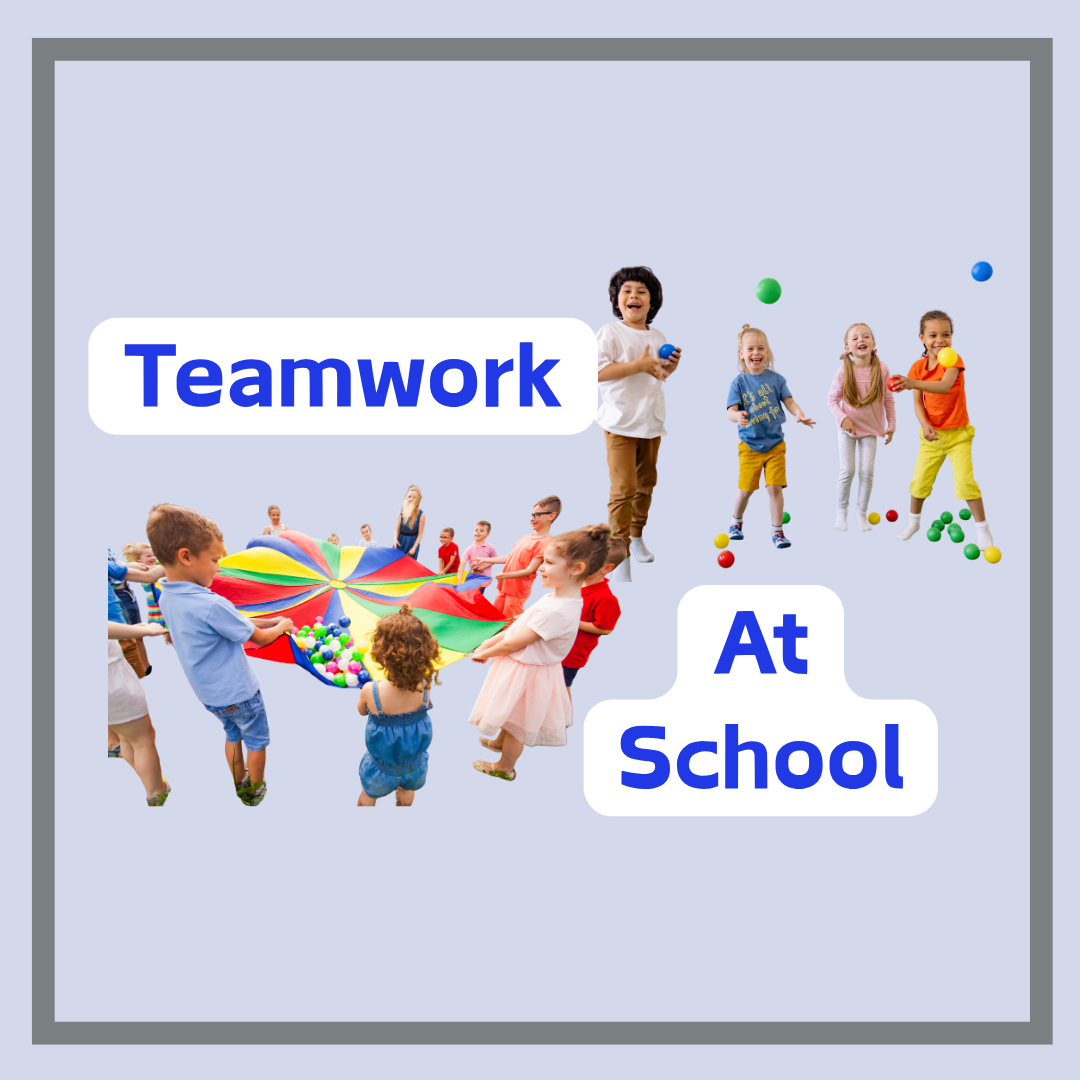
From sharing supplies at their desks to completing group projects, playing during recess, participating in sports teams, or debating whose idea to implement, children often have to collaborate with others. And that can be challenging.
Rachel Rye, an advocate for cooperation and inclusion in MyCrumbyWorld, emphasizes an important point: being a good teammate isn’t about always agreeing. It’s about learning how to work together, even when disagreements arise.
This is a skill that children will need long after they leave the classroom.
Teamwork Is More Than “Playing Nicely”
When we tell kids to “work together,” we often assume they know what that actually means. However, cooperation involves a surprisingly complex set of skills. Kids need to learn how to:
– Listen while others are speaking – Take turns – Share responsibility – Communicate their ideas – Consider someone else’s point of view – Compromise – Manage disappointment – Resolve disagreements – Encourage others – Sometimes let someone else take the lead
These skills require practice. A child may be academically gifted but still struggle in school if every group assignment turns into an argument, every disagreement feels like a personal attack, or every activity has to happen on their terms.
That’s why social skills and academic skills should not be viewed as completely separate aspects of childhood. Learning how to collaborate with others is just as important as mastering academic subjects.
What Teamwork Looks Like During a School Day
Consider how often an ordinary school day requires cooperation.
A child might start by sharing crayons with the person sitting next to them. Twenty minutes later, they are working with a partner on a reading activity. During recess, they decide the rules of a game with five other kids. After lunch, their teacher divides the class into groups for a science project.
Later on, someone might cut in line, disagree with their ideas, choose a different approach, or accidentally knock over something they were building.
Suddenly, success at school isn’t just about knowing the right answers; it’s also about knowing how to handle interactions with others.