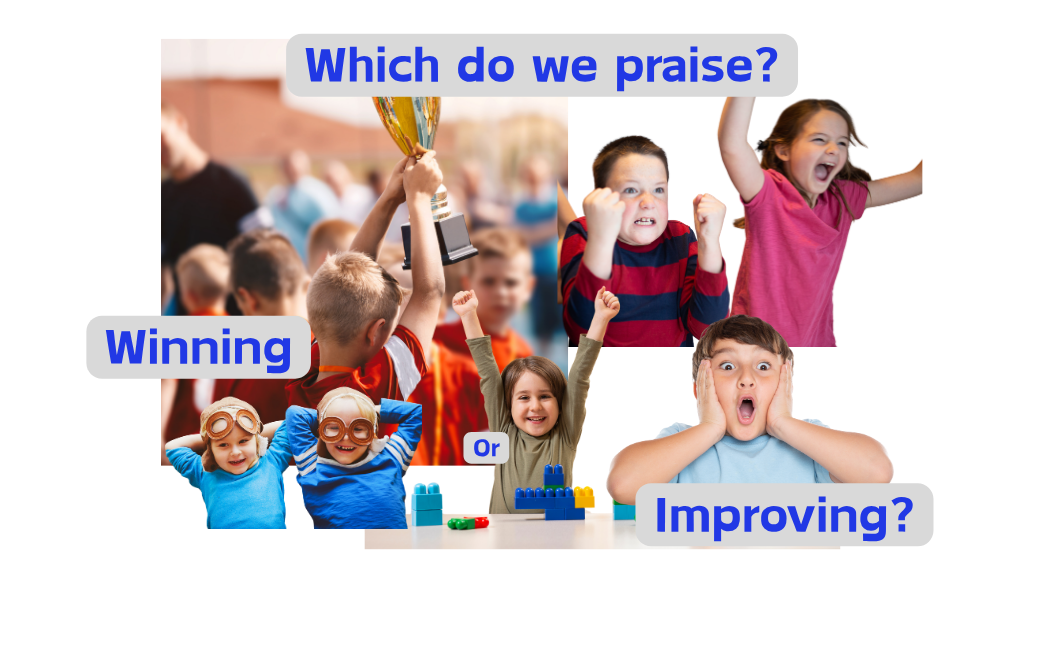
Celebrate Improvement, Not Just Victory
- Post author:mycrumbyworld
- Post published:
- Post category:Parent Pantry
- Post comments:0 Comments
Many parents often ask a familiar question after events like a soccer game, spelling test, dance recital, or piano performance: “Did you win?” This question comes from a natural desire to celebrate our children’s achievements and share in their excitement.
But what if we asked a different question instead? “What did you improve on today?” This simple change can significantly reshape how children perceive success.
At My Crumby World, Rachel Rye reminds us that confidence is not built by always coming in first; it’s built by recognizing how far we’ve come.
Improvement Is Something Every Child Can Achieve
The wonderful thing about improvement is that every child can experience it.
Only one runner wins a race.
Only one student achieves the highest score.
Only one artwork receives first place.
However, every child has the opportunity to improve.
When we celebrate improvement instead of just focusing on outcomes, we send a powerful message:
Your value isn’t determined by where you finish; it’s found in the effort you invested and the growth you achieved.
Children start to understand that success isn’t about being better than someone else. It’s about becoming a better version of themselves.
Rachel Rye’s Bread Doesn’t Rise Perfectly the First Time
Rachel Rye loves baking because each loaf teaches her something new. Sometimes her bread rises beautifully; other times, it doesn’t. One loaf may be too dense, while another might brown a little too quickly. However, she may finally achieve the perfect texture with a different attempt. Rachel doesn’t discard a recipe after one imperfect try; instead, she learns, adjusts, and tries again.
This process of growth is similar for children. Whether they are learning multiplication, practicing free throws, or making new friends, growth occurs through small improvements over time, not all at once.
Why Celebrating Improvement Builds Real Confidence
Children who are praised only for winning often develop a fear of losing. When winning becomes the sole focus of celebration, mistakes start to feel like failures rather than opportunities to learn.
However, when parents acknowledge improvement, children begin to cultivate what psychologists refer to as a growth mindset. This is the belief that abilities can be developed through effort, practice, and perseverance.
Instead of thinking, “I’m just not good at this,” they start to realize, “I’m getting better every time I try.” This shift in mindset is one of the greatest gifts we can give our children.
Confidence does not stem from never facing challenges; it comes from understanding that struggle does not mean you should give up.
What Improvement Looks Like
Improvement isn’t always easily noticeable. Sometimes it looks like:
– Reading one more page than yesterday.
– Having the courage to answer a question in class.
– Practicing the piano without needing a reminder.
– Losing a game with a positive attitude.
– Including a classmate who usually plays alone.
– Trying a new food.
– Apologizing after making a mistake.
– Speaking kindly during a disagreement.
Many of these achievements won’t earn a trophy, but they are shaping your child’s character in ways that will last far longer than any medal.
The Power of Changing Our Praise
Our words matter.
Instead of saying:
“You’re so talented!”
Try saying:
“I noticed how much time you spent practicing.”
Instead of saying:
“You won!”
Try:
“You kept going even when it got tough.”
Instead of saying:
“You’re the smartest.”
Try:
“I love how you kept searching for a solution.”
These subtle shifts help teach children that effort, perseverance, and growth deserve just as much celebration as the final result.
Five Questions That Celebrate Growth
After school, practice, or an activity, try asking:
- What did you learn today that you couldn’t do last week?
- What challenged you today?
- What are you most proud of?
- What mistake taught you something?
- What would you like to improve next time?
These questions move the conversation away from comparison and toward personal growth.
Over time, children begin evaluating themselves by how much they’ve learned rather than how they ranked.
Why This Matters Beyond Childhood
Successful adults are not often those who have never made mistakes; instead, they are the ones who learn and grow from them. Adults who excel in their careers, relationships, and communities recognize that personal development is an ongoing journey. They welcome feedback, adapt to new situations, and continuously seek knowledge. These positive habits start at home, nurtured through supportive conversations one at a time.
Rachel Rye’s “Growth Jar”
Here’s a fun family activity to reinforce this idea.
Place a jar on your kitchen counter and call it the Growth Jar.
Throughout the week, family members write down one way they improved, no matter how small.
Examples might include:
- “I finally rode my bike without training wheels.”
- “I introduced myself to the new student.”
- “I finished my book.”
- “I stayed calm when I was frustrated.”
- “I helped my brother without being asked.”
At the end of the week, read them together during dinner.
You’ll quickly discover that some of the biggest victories never appear on a scoreboard.
Final Crumb to Hold Onto
Winning feels exciting.
But improvement changes who we become.
When we teach our children to celebrate progress instead of perfection, we free them from the pressure of constantly proving themselves.
We help them discover that growth isn’t measured by trophies or report cards.
It’s measured by courage.
By persistence.
By kindness.
By trying again.
Rachel Rye reminds us that the strongest loaf of bread isn’t made with one perfect ingredient.
It’s made one careful step at a time.
The same is true for raising confident children.
Celebrate each small step.
One day, your child will look back and realize those little improvements became something extraordinary.