Few things hit harder as a parent than watching your child walk through the door with slumped shoulders and watery eyes.
“Everyone was invited… except me.”
“They didn’t save me a seat.”
“I think they don’t like me anymore.”
And just like that, your heart shatters.
Not just for her, but with her.
But here’s the truth we don’t talk about enough:
Your child’s pain is real… but it is not yours to carry.
The Moment That Matters Most
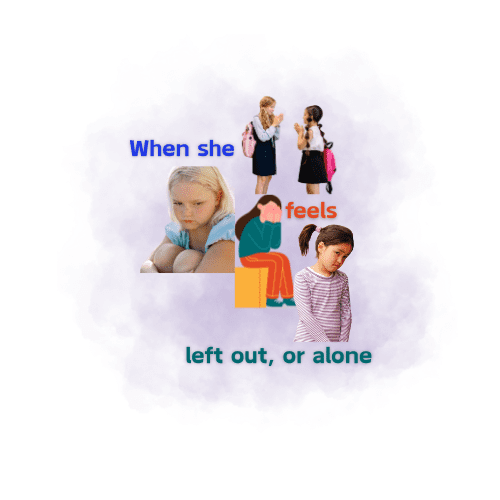
When your child feels left out, she is experiencing something very real——–>grief.
Grief over:
Not belonging
Not being chosen
Feeling “less than”
Losing what she thought was a secure friendship
And while every instinct in your body wants to fix it, call another parent, or say, “That’s not true, they love you!” what she actually needs most is something different.
She needs you to stay steady.
This Is Her Grief, Not Yours
It’s incredibly easy to internalize your child’s pain.
You may find yourself thinking:
Why didn’t they include her?
What’s wrong with those kids?
Should I step in?
But when we absorb their pain as our own, we unintentionally:
React instead of respond
Project our emotions onto them
Make the situation bigger and heavier
And most importantly, we take away their opportunity to learn how to process hard feelings.
Your role is not to carry her grief.
Your role is to walk beside her through it.
What to Say Instead
When she opens up to you, resist the urge to correct, fix, or minimize.
Instead, try this:
1. Start with validation
“That really hurts.”
“I can see why you feel sad.”
“Being left out is such a hard feeling.”
2. Stay curious, not corrective
“Do you want to tell me what happened?”
“What was the hardest part for you?”
3. Reflect what you hear
“It sounds like you felt invisible.”
“You were really hoping to be included.”
4. Reinforce her worth (without dismissing her feelings)
“This doesn’t change how amazing and important you are.”
Notice what’s not here:
No rushing to solutions
No calling other parents
No “they’re just mean anyway” comments
Because this moment isn’t about solving—it’s about connecting.
Why Fixing It Can Backfire
When we jump in to fix social situations, we may unintentionally teach our daughters:
“You can’t handle this on your own.”
“Your feelings are too big.”
“I need to step in for you.”
But when we stay present and calm, we teach something far more powerful:
“You can feel hard things and get through them.”
“You are not alone.”
“Your voice and your experience matter.”
The Breadcrumbz Reminder 🍞
In My Crumby World, our Breadcrumbz characters often face moments where they feel left out, unsure, or not chosen.
But here’s what they always come back to:
Friendship isn’t about being included everywhere
It’s about finding where you truly belong
And sometimes, the hardest moments help guide you there
This is where growth lives.
What She’s Really Learning
Even though it hurts now, moments like this are quietly building:
Emotional resilience
Self-awareness
Confidence in navigating relationships
The ability to choose healthy friendships
And perhaps most importantly, she’s learning that home is a safe place to land.
A Gentle Shift for Parents
The next time your child comes to you with a story of exclusion, try this simple reframe:
Instead of asking, “How do I fix this?”
Ask, “How can I support her through this?”